
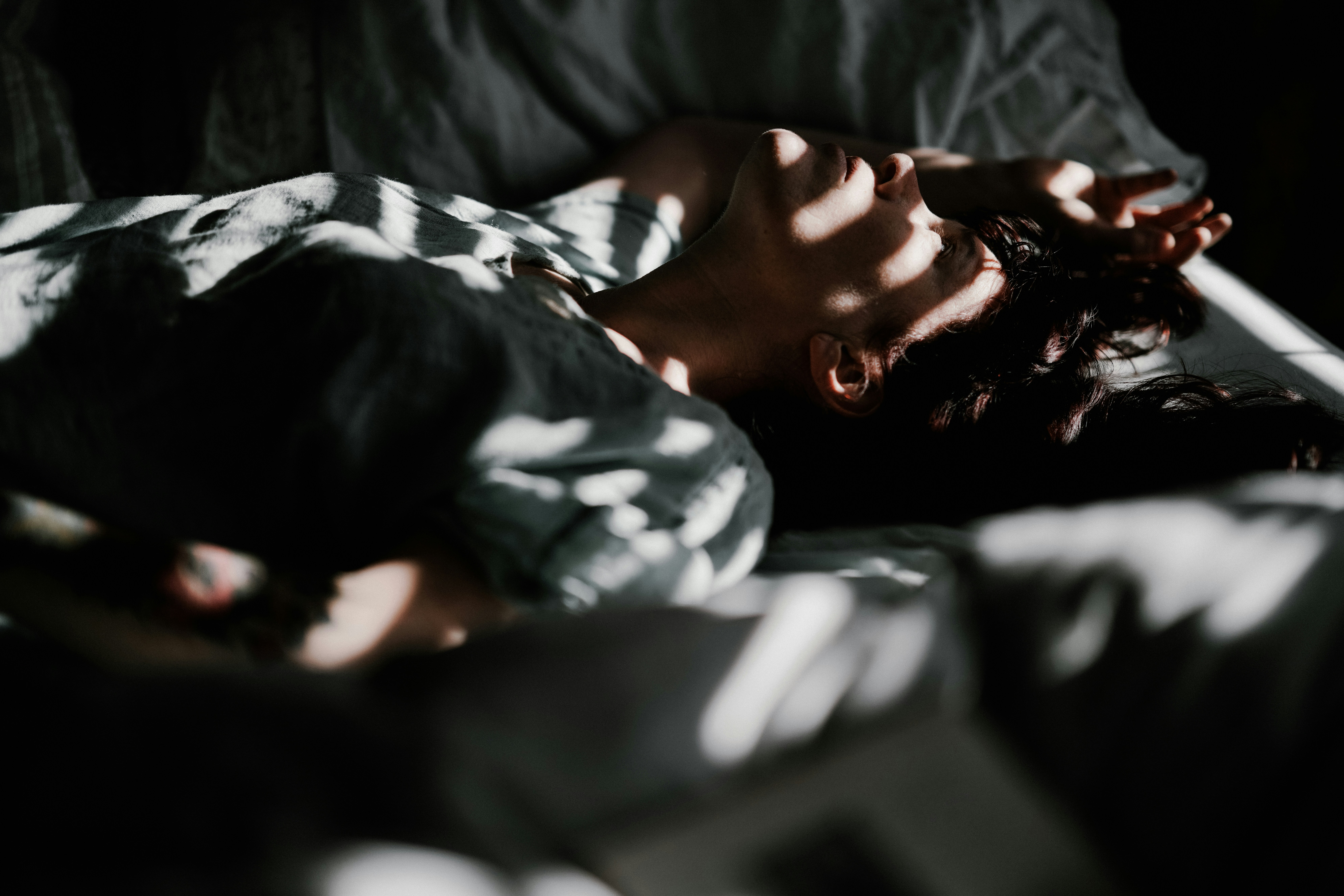
Introduction: When Sleep Becomes a Struggle
Sleep is essential for mental and physical well-being. Yet, for millions of people, anxiety turns the night into a battleground. Anxiety-induced insomnia, one of the most common sleep disturbances, creates a vicious cycle: anxiety disrupts sleep, and poor sleep exacerbates anxiety (Alfano et al., 2010).
This article offers a comprehensive, scientifically grounded, and holistic approach to managing anxiety-induced insomnia naturally. With insights from neuroscience, psychology, behavioral therapy, and integrative health, we provide actionable strategies for lasting change.
1. Understanding the Connection Between Anxiety and Insomnia
1.1 The Vicious Cycle
Anxiety activates the hypothalamic-pituitary-adrenal (HPA) axis, releasing cortisol and adrenaline that keep the brain hyper-alert (Buckley & Schatzberg, 2005). This physiological arousal delays sleep onset, fragments deep sleep, and increases nighttime awakenings.
Over time, anticipatory anxiety about poor sleep alone can become a trigger for insomnia (Harvey, 2002).
1.2 What is Anxiety-Induced Insomnia?
- Difficulty falling or staying asleep due to ruminative thoughts
- Waking up too early and unable to return to sleep
- Restlessness in body and mind, often with physical symptoms like racing heart or stomach discomfort
2. Root Causes and Risk Factors
- Stress and worry: Chronic stress keeps the sympathetic nervous system activated (McEwen, 2006)
- Cognitive overactivity: Persistent negative thinking, catastrophizing (Espie, 2002)
- Lifestyle patterns: Irregular sleep schedules, caffeine, screen use before bed (Hirshkowitz et al., 2015)
- Hyperarousal trait: Some people are more biologically prone to sleep disruption (Bonnet & Arand, 2010)
3. The Science of Sleep and Anxiety
3.1 Brain Chemistry and Sleep
- GABA (gamma-aminobutyric acid): Key inhibitory neurotransmitter that promotes sleep (Winkelman et al., 2008)
- Melatonin: Regulates the sleep-wake cycle; disrupted by blue light and cortisol (Pandi-Perumal et al., 2007)
3.2 Anxiety’s Disruptive Role
- Increased cortisol levels in the evening (Vgontzas et al., 2001)
- Amygdala hyperactivation leads to increased threat detection during sleep (van der Helm et al., 2011)
4. Step-by-Step Guide to Overcoming Anxiety-Induced Insomnia Naturally
Step 1: Create a Nervous-System-Calming Evening Routine
- Wind down with calming activities: gentle yoga, warm bath, non-stimulating reading
- Ditch screens at least 60 minutes before bed (Chang et al., 2015)
- Use dim lighting to encourage melatonin production
Step 2: Cognitive Behavioral Strategies
- Cognitive Behavioral Therapy for Insomnia (CBT-I): The gold standard for insomnia treatment (Morin et al., 2006)
- Identify and challenge catastrophic sleep thoughts: “I’ll fail tomorrow if I don’t sleep”
- Use a “worry journal” earlier in the day to externalize racing thoughts (Harvey, 2002)
Step 3: Engage in Somatic Regulation
- Diaphragmatic breathing: Activates the parasympathetic nervous system (Ma et al., 2017)
- Progressive Muscle Relaxation (PMR): Reduces physical tension and improves sleep onset (Jacobson, 1938)
- Vagus nerve stimulation: Humming, chanting, cold face splashes (Porges, 2011)
Step 4: Use Natural Sleep Promoters
- Herbal teas: chamomile, valerian root, lemon balm (Zick et al., 2009)
- Magnesium and glycine: amino acids that support relaxation (Wienecke et al., 2016)
- Aromatherapy: lavender oil shown to reduce anxiety and improve sleep (Lillehei & Halcon, 2014)
Step 5: Anchor the Circadian Rhythm
- Go to bed and wake at the same time daily—even weekends (Czeisler, 1999)
- Get morning sunlight for at least 15 minutes to reset melatonin production
- Limit naps to under 30 minutes before 3 p.m.
Step 6: Shift Relationship with Sleep
- Avoid clock-watching which increases stress
- Practice acceptance: allow wakefulness without panic (Ong et al., 2008)
- Develop a “rest is still restorative” mindset
Step 7: Mindfulness and Meditation Practices
- Mindfulness-Based Stress Reduction (MBSR): Proven to reduce insomnia severity (Winbush et al., 2007)
- Body scan meditation: focus attention sequentially through the body
- Guided imagery: picture a peaceful, calming scene
Step 8: Track and Adjust
- Keep a sleep diary to identify patterns
- Use devices that track sleep stages and adjust routines accordingly
5. When to Seek Professional Support
- If insomnia persists longer than 4 weeks
- If anxiety disrupts daily functioning
- Consider CBT-I therapists, psychologists, or sleep specialists
Sleep medication may be a short-term option but is not a long-term solution due to dependency and tolerance (Kripke, 2000).
6. Case Study: From Wired to Rested
Sophie, a high-achieving professional, struggled with racing thoughts and nightly wakeups for months. After implementing a worry journal, magnesium supplements, nightly PMR, and a regular sleep-wake routine, her sleep quality improved within 6 weeks. Her anxiety reduced, energy returned, and she reported greater clarity at work.
7. Long-Term Maintenance for Restful Nights
- Continue mindfulness practices 3x/week
- Adjust routines seasonally
- Be flexible but consistent with sleep-wake cycles
- Keep electronics out of the bedroom
- Revisit CBT-I strategies when stress spikes
Conclusion: Reclaiming Your Nights, Naturally
Anxiety-induced insomnia is not simply about poor sleep—it’s about a dysregulated system struggling to find safety and calm. With compassionate awareness, science-backed tools, and natural approaches, deep rest is possible again.
Sleep is not a luxury; it is a biological necessity and a profound act of self-care. Reclaim it—one breath, one night, one step at a time.
References
- Alfano, C. A., Ginsburg, G. S., & Kingery, J. N. (2010). Sleep-related problems among children and adolescents with anxiety disorders. Journal of the American Academy of Child & Adolescent Psychiatry, 49(9), 934-941.
- Bonnet, M. H., & Arand, D. L. (2010). Hyperarousal and insomnia: state of the science. Sleep Medicine Reviews, 14(1), 9-15.
- Buckley, T. M., & Schatzberg, A. F. (2005). On the interactions of the hypothalamic-pituitary-adrenal (HPA) axis and sleep: normal HPA axis activity and circadian rhythm, exemplary sleep disorders. Journal of Clinical Endocrinology & Metabolism, 90(5), 3106–3114.
- Chang, A. M., et al. (2015). Evening use of light-emitting eReaders negatively affects sleep, circadian timing, and next-morning alertness. PNAS, 112(4), 1232–1237.
- Czeisler, C. A. (1999). The effect of light on the human circadian pacemaker. Ciba Foundation Symposium.
- Espie, C. A. (2002). Insomnia: Conceptual issues in the development, persistence, and treatment of sleep disorder in adults. Annual Review of Psychology, 53, 215–243.
- Harvey, A. G. (2002). A cognitive model of insomnia. Behaviour Research and Therapy, 40(8), 869–893.
- Hirshkowitz, M., et al. (2015). National Sleep Foundation’s sleep time duration recommendations: methodology and results summary. Sleep Health, 1(1), 40–43.
- Jacobson, E. (1938). Progressive relaxation. University of Chicago Press.
- Kripke, D. F. (2000). Chronic hypnotic use: deadly risks, doubtful benefit. Sleep Medicine Reviews, 4(1), 5–20.
- Lillehei, A. S., & Halcon, L. L. (2014). A systematic review of the effect of inhaled essential oils on sleep. Journal of Alternative and Complementary Medicine, 20(6), 441–451.
- Ma, X., et al. (2017). The effect of diaphragmatic breathing on attention, negative affect, and stress in healthy adults. Frontiers in Psychology, 8, 874.
- McEwen, B. S. (2006). Sleep deprivation as a neurobiologic and physiologic stressor: Allostasis and allostatic load. Metabolism, 55(10), S20–S23.
- Morin, C. M., et al. (2006). Psychological and behavioral treatment of insomnia: update of the recent evidence. Sleep, 29(11), 1398–1414.
- Ong, J. C., et al. (2008). A mindfulness-based approach to the treatment of insomnia. Journal of Clinical Psychology, 64(4), 449–460.
- Pandi-Perumal, S. R., et al. (2007). Melatonin: Nature’s most versatile biological signal? FEBS Journal, 273(13), 2813–2838.
- Porges, S. W. (2011). The polyvagal theory: Neurophysiological foundations of emotions, attachment, communication, and self-regulation. Norton.
- van der Helm, E., et al. (2011). Sleep deprivation impairs the accurate recognition of human emotions. Sleep, 33(3), 335–342.
- Vgontzas, A. N., et al. (2001). Chronic insomnia and activity of the stress system: A preliminary study. Journal of Psychosomatic Research, 53(3), 865–871.
- Wienecke, T., et al. (2016). Amino acids, anxiety, and sleep: Investigating the anxiolytic and sleep-promoting effects of glycine and magnesium. Neuropsychopharmacology, 41(Suppl 1), S396.
- Winkelman, J. W., et al. (2008). Reduced brain GABA in primary insomnia: preliminary data from 1H-MRS. Sleep, 31(11), 1499–1506.
- Winbush, N. Y., et al. (2007). Mindfulness-based stress reduction for the treatment of insomnia: A review. Explore, 3(6), 585–591.
- Zick, S. M., et al. (2009). Preliminary examination of the efficacy and safety of a standardized chamomile extract for chronic primary insomnia: A randomized placebo-controlled pilot study. BMC Complementary and Alternative Medicine, 9(1), 1-11.
Leave a Reply